
I dedicate every month to a different goddess. January belongs to Prajnaparamita. She’s not a goddess in the usual Pagan sense. In Mahayana Buddhism, one of the major branches of Buddhist practice, she is the ‘Perfection of Wisdom’.
I first encountered Prajnaparamita when I joined the Mt Shasta Goddess Temple in 2021. Prajnaparamita is first in the temple’s devotional calendar. As a student in the temple’s two-year priestess program, you’re encouraged to develop your own devotional calendar. During my first year, I followed the temple’s. Some of the figures, such as Hekate, were already in my personal pantheon. Others, such as Isis, resonated. Some, such as Baba Yaga and Santa Muerte, did not.
Prajnaparamita not only resonated but also became an essential figure in my practice and, later, in how I aim to move through the world.
The lotus heart
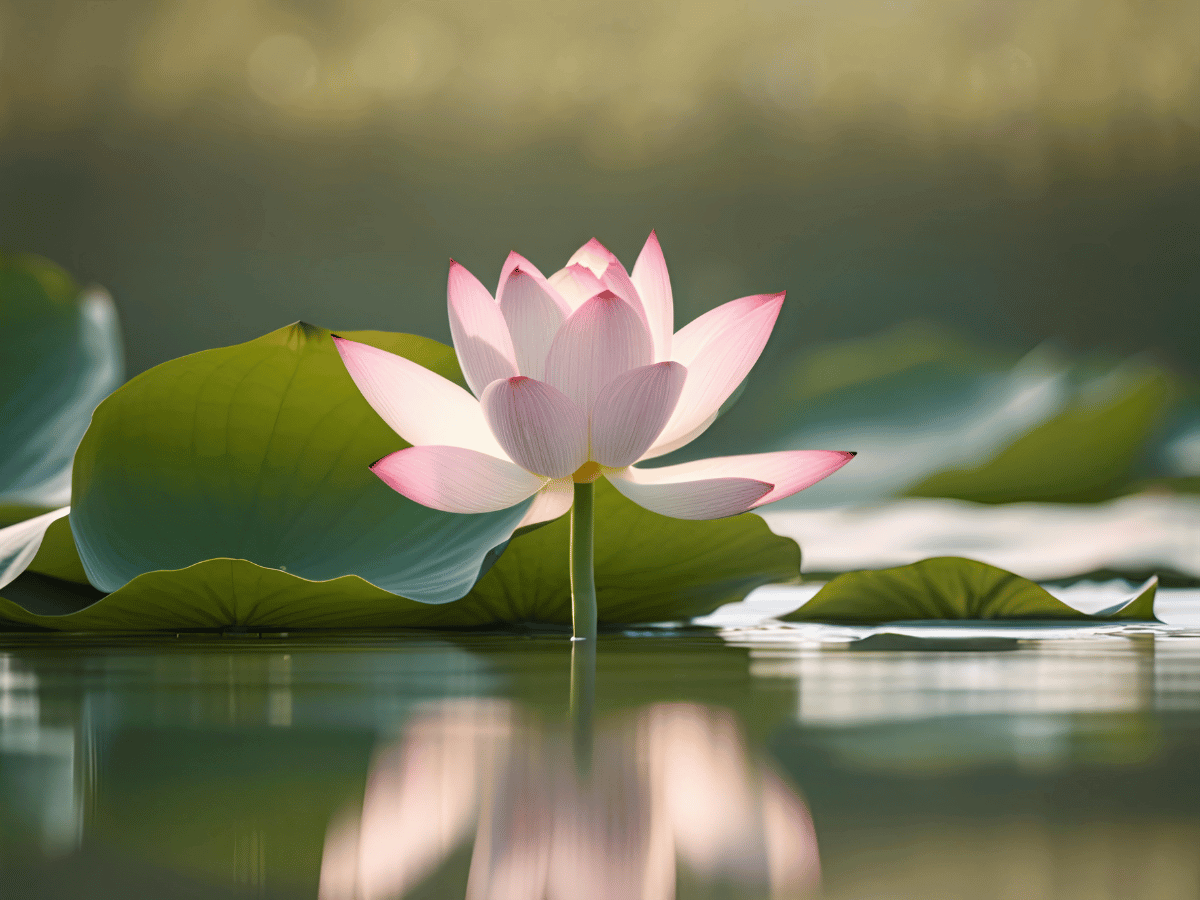
When it came time to write vows, I dedicated my meditation practice and the cultivation of my lotus heart to her. By ‘lotus heart’, I mean a particular kind of inner development: a heart that opens without becoming flimsy, and a heart that stays clear without turning hard. What I’m reaching for is devotion expressed as practice, lived in the body, refined over time. The lotus has always felt like an honest symbol for this, because it does not bloom in spite of the mud; it blooms through it. The mud is part of the conditions that make blooming possible.
Wisdom can float above life when it stays mostly in the head or in the realm of spiritual ideals. It looks like knowing the right teachings, using the right language, and explaining things clearly. Knowledge is easily confused with wisdom. I want wisdom that is usable, not only admirable. I am reaching for a distinction between wisdom as an idea and wisdom as a lived capacity. I want the kind of wisdom that lives in the body, that stays present when life is messy, and that does not collapse into reactivity when grief and confusion are in the room. I want wisdom that holds up under pressure. Prajnaparamita is a way of seeing, a way of being, and a way of responding.
This practice has become essential to me in two particular places.
In the hospital
One is the hospital, where I work as a pastoral carer. Hospital life is intensely real. It strips away the fantasy that suffering happens somewhere else, to someone else, in a future that might never arrive. People are afraid. People are exhausted. Families are stretched thin by waiting, decisions, uncertainty, and love. Even when things go well, the experience is often disorienting. Even when death is not near, vulnerability is. In this setting, spiritual care is not theatre. It is presence. It is listening. It is accompanying another person’s reality without trying to impose my own on it.
In the wider world
The other place is the wider world, and the ways it presses on our minds. Many of us are living with a steady backdrop of political tension, social volatility, and the feeling that events are accelerating faster than our nervous systems can process. For some people, that pressure is immediate and personal. For others, it arrives through friendships, community, and the constant reach of media. It is easy to become reactive, consumed, or numb. It is easy to mistake vigilance for wisdom, and outrage for effective care.
I recognise that I have the privilege of choosing this practice. For people whose bodies, families, or basic rights are directly threatened by political events, the emergency is not metaphorical—it is immediate and material. The cultivation I’m describing is not about detachment from their struggles, but about maintaining the capacity to show up for them sustainably. Burnout and reactivity do not serve liberation. Neither does spiritual bypassing disguised as equanimity.
Cultivating my lotus heart is one way I meet all of this.
Dharma as current
I have been thinking about Dharma lately as a kind of current. When I use the word Dharma here, a Sanskrit term central to various Indian religions, I am not talking so much about beliefs as about the shape of reality and the way we learn to live in alignment with it. Dharma points to cause and effect, interdependence, and impermanence, and to the practices that help us see these truths clearly. It is wisdom in the practical sense: the capacity to meet what is happening without adding unnecessary distortion, and to respond in ways that reduce harm.
Life is already moving, conditions are already shaping outcomes, and everything we do participates in that movement. When I practise, I become more aware of cause and effect, of interdependence, of impermanence, and of how quickly the mind turns experience into a story it then mistakes for reality. Dharma, for me, is not an abstract idea. It is the ongoing invitation to see clearly through the “shimmering rippling landscape of appearance”, as we say in the Temple, and to respond with skill.
The term dharma derives from the Sanskrit root “dhr”, which means “to support, hold, or bear”. Cooperating with dharma takes me, again and again, beyond self-centredness.
Beyond the self
I want to be careful with this, because self-centredness is not the same thing as having a self, and it is not the same thing as caring for yourself. Spirituality can help us to heal, survive, and make meaning, and that is real. What I am talking about is the kind of spiritual posture that keeps the self as the constant centre of gravity, the habit of relating to practice (and deities and spirits) mainly as a tool for personal outcomes, personal power, and personal reassurance. In some corners of contemporary Pagan and Witchcraft culture, this becomes so normal that we stop noticing it.
This practice asks something different of me. It draws my attention to the reality that I live within a web of beings, and that my inner life is never only mine. My moods spill into my relationships. My reactivity affects the people I love. My despair, if it turns into cynicism, becomes a kind of violence. My hope, if it turns into denial, becomes another kind of harm.
Devotion to becoming
This is one reason I experience devotion to Prajnaparamita as devotion to becoming. I am not trying to become ‘perfect’. I am trying to become more like the goddesses I honour, in the ways that actually matter. What makes a goddess, in human terms, is not aesthetic or branding. It is the capacity to bestow. It is the ability to give what is needed without making it about control. It is a strength that does not require cruelty. It is generosity that is not performative. It is clarity that does not humiliate.
In the hospital, I see what happens when people encounter that kind of presence. Something softens. Something steadies. Often it is subtle. There is no dramatic fix. There is simply the feeling of not being alone with what is happening.
This is where one of my notes keeps returning: we are not saviours.
By this, I mean something very grounded. The desire to help can be beautiful, and it can also become a trap. It is easy, especially when the world feels frightening, to slide into a saviour story in the mind: If I say the right thing, if I stay strong enough, if I fight hard enough, if I carry enough, then I can rescue someone from pain, or rescue the world from collapse. The saviour story is often a way of trying to control anxiety. It narrows the heart. It narrows the mind. It makes other beings into problems to solve instead of people to meet.
This cultivation invites me into a different stance. I am part of everyone trying to help. I am one thread in a much larger fabric of care. My job is not to be extraordinary. My job is to be present, to be skilful, and to contribute what is mine to contribute without grasping at a role that was never mine to hold.
A perfected way of seeing the nature of reality
Stories are not inherently bad. We need them to make sense of our lives. The problem is how the mind can grip a story until it becomes a solid object, until it feels like reality itself. The mind narrates constantly. It predicts catastrophe. It searches for villains. It rehearses arguments. It replays imagined conversations. It seeks certainty and cannot find it, so it reaches for outrage as a substitute.
When I am practising, I can often feel the exact moment when the mind wants to harden. It wants to simplify. It wants to turn complex beings into symbols. It wants to turn fear into righteousness. Sometimes righteousness is called for, and I do not believe that wisdom means neutrality. What I am talking about is the difference between taking a stand and being consumed by reactivity. One can be ethically committed and still be mentally unwell. One can care deeply and still be driven by compulsion.
This way of working does not ask me to stop caring about what is happening in the world. It asks me to care in a way that keeps me able to function, to relate, and to act.
The practice itself
This is where my practice becomes very simple and very embodied. I sit. I return to the breath. I notice the sensations in the body. I feel how quickly fear tries to become armour. I let the heart be a heart again, not a barricade. I remind myself that clarity is available, even when certainty is not. I let my attention widen to include the whole field of beings impacted by what is happening, not only the part of the story that makes me feel most personally outraged, most helpless, or most comfortable. I let grief be present without making it the whole identity of the moment. I let anger be present without letting it steer the entire ship.
In the language of the lotus, I let the mud be part of the conditions.
In the language of Prajnaparamita, I practise seeing the empty nature of my thoughts, which does not mean they are meaningless, but that they are not solid objects that must be obeyed. A thought can arise and pass without becoming a command. A feeling can move through without becoming a personality. For those of us with some distance from immediate harm, a news headline can be true and important without being metabolised as a personal emergency in every cell of the body. This is not about minimising real threats. It is about recognising that for some of us, the constant state of emergency is a nervous system response rather than a reflection of our actual immediate safety, and that this distinction matters if we want to be useful rather than merely activated.
The fruit
The fruit of this, when it is working, is not a spiritual high; it is a skill.
It is the ability to interact more skilfully with other beings. It is pausing before speaking when a conversation is charged. It is noticing when I have crossed the line from informed to flooded. It is choosing boundaries so that care remains sustainable. It is accepting that sometimes the most compassionate response is not engagement, but rest. It is keeping my heart open enough that I do not lose tenderness, even when the world feels brutal.
I cannot offer a magical fix. I cannot offer saviourhood. I can offer companionship, steadiness, and the reminder that our nervous systems deserve care, not only our political minds. I can offer prayers and magic that are less about controlling outcomes and more about fortifying what is needed: courage, discernment, endurance, mutual aid, community protection, wise action, and the capacity to keep loving what is worth loving.
For me, I can continue to cultivate this practice as a form of devotion with teeth. A devotion that lives in the way I show up. A devotion that is not only private, but relational. A devotion that recognises that wisdom and compassion belong together, and that both of them are trainable.
This is why Prajnaparamita belongs to January. She is threshold work. She is the practice that sets the tone, not just for a single day, but for the entire year ahead. Just as my morning meditation shapes how I meet the day, whether I move through it armoured or open, reactive or responsive, this month of dedication to the Perfection of Wisdom shapes how I meet everything that follows.
I am drawn to slow mornings. I need that quiet, that return to the breath, that space before the day makes its demands. January works the same way. It is the slow beginning, the foundation, the commitment made before I know what the year will ask of me.
Every morning, I show up at my altar to meditate. It is slow work. But it is the work that makes the rest possible.