

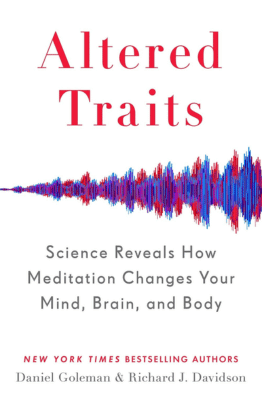
 Altered Traits: Science Reveals How Meditation Changes Your Mind, Brain, and Body by Daniel Goleman and Richard Davidson is a fascinating blend of ancient wisdom and neuroscience. Published in 2017 (and in Great Britain as The Science of Meditation), the book explores how meditation transforms not just temporary states of mind but lasting traits of character, focus, and compassion. Goleman and Davidson highlight the diversity of meditation practices, from mindfulness to loving-kindness, while also addressing the challenges of meditation research, including inconsistent definitions and a lack of replicable studies.
Although I don’t read much science and found parts of the book a bit challenging, it was engaging and well worth the effort. It celebrates meditation’s transformative potential while acknowledging that it’s not a cure-all. Readers should note that the field has likely evolved since its publication, and newer research may offer updated findings.
This book is excellent for anyone curious about the intersection of spirituality and science, as well as for anyone interested in meditation. Read my full review here.
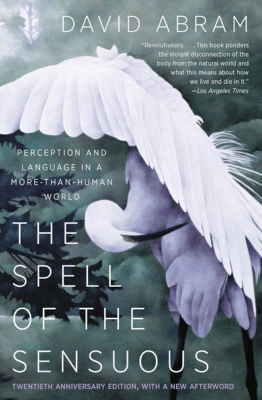 While I found David Abram’s The Spell of the Sensuous somewhat repetitive and wordy, the book offers a profound exploration of our sensory relationship with the natural world. Abram weaves philosophy, anthropology, and personal experience to explore how language and perception shape our connection to nature. His insights are particularly resonant for those interested in animism and nature-based spiritualities. Despite its occasional verbosity, I highly recommend this work for its unique perspective on re-engaging with the more-than-human world.
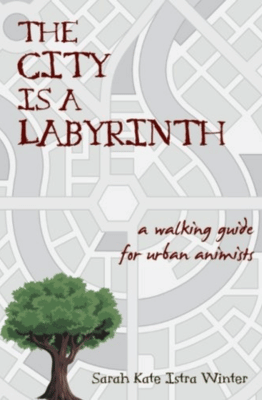 The City Is a Labyrinth is a thoughtful and engaging guide for animists looking to connect with the spirits of the urban landscape. Despite its brevity (just 60 pages, including extras), it offers surprisingly rich insights into seeing cities as living, enchanted spaces. It is a delightful little read for animists, Pagans, and polytheists.
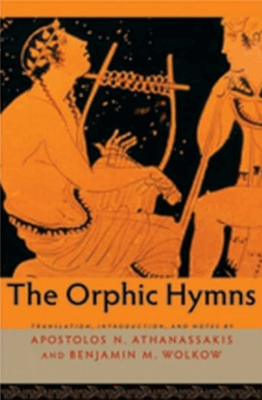 The Orphic Hymns are a collection of 87 ancient Greek hymns addressing gods, goddesses, natural forces, and cosmic principles. They are liturgical texts that were used in mystery cult rituals, likely by initiates in Bacchic mystery cults in Asia Minor around the 2nd or 3rd century CE. Each hymn specifies an incense offering and follows a ritual structure: invocation, description of divine attributes, and petition.
Reading them was like opening a window onto Hellenistic religious practice. These are working prayers, rich with epithets and invocations, composed for actual ritual use. The Athanassakis and Wolkow translation strikes a good balance between scholarly accuracy and poetic readability. Each hymn is brief but dense with imagery and divine attributes, making them suitable for both study and practical devotional work.
For polytheists, these hymns offer historically-grounded language for approaching the Greek gods. For those interested in the broader Western Mystery Tradition, they provide insight into the Orphic current that influenced Pythagoreanism, Platonism, and later esoteric movements. Whether you approach them as literature, historical documents, or living prayers, The Orphic Hymns offer a beautiful gateway into ancient devotional practice.
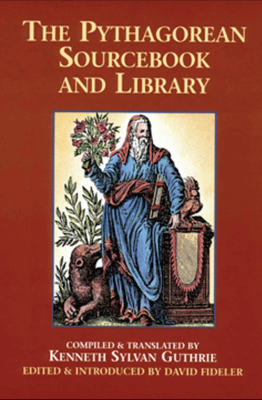 I picked this up intending to read a few selections, but I found myself captivated and ended up reading the entire collection. This anthology gathers fragments, biographies, and philosophical treatises that illuminate Pythagorean thought—its mathematics, mysticism, ethics, and cosmology. What makes it particularly valuable is the breadth of material.
 Plato’s Timaeus offers a vision of the cosmos as a living, ordered whole—a dialogue that has shaped Western philosophy and esoteric thought for over two millennia. Reading it felt like tracing one of the major tributaries feeding into the Hermetic and Neoplatonic streams I’ve been exploring this year. Zeyl’s translation is accessible without being oversimplified, making Plato’s cosmology—the World Soul, the demiurge, the relationship between the eternal and the temporal—approachable for contemporary readers. While the geometrical and mathematical passages can be dense, the core vision of an ensouled, intelligible universe resonates deeply with magical worldviews. It’s foundational reading for anyone interested in the Western Mystery Tradition.
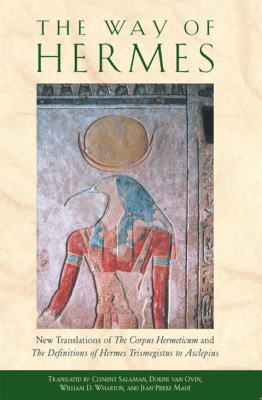 The Way of Hermes was my first dip into Hermetic literature, and it proved an accessible entry point. The translation is clear and readable; I appreciated not needing a dictionary at hand or having to pause every few lines to look up unfamiliar terms.
I picked it up to satisfy both intellectual and spiritual curiosity about a body of work foundational to the Western Mystery Tradition. The vision here doesn’t neatly match how I see the world, but there are definite echoes: the macrocosm, a living, ordered cosmos, and the emphasis on mind, virtue, and praise. This isn’t a practical manual; it’s contemplative philosophy in short, concentrated passages, offering much to ponder. I can see myself returning to it for orientation and texture. Salaman provides a graceful doorway into the Hermetic tradition and an inviting place to begin.
If you want to go deeper, I also read and recommend Hermetica by Copenhaver and Hermetica II by M. David Litwa.
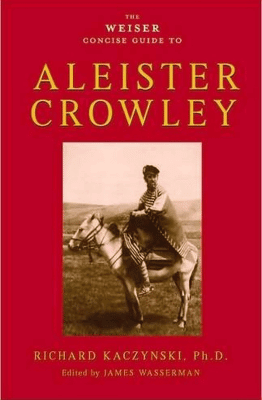 The Weiser Concise Guide to Aleister Crowley is a crisp, well-organised primer that distils a sprawling life and system into an accessible overview. Kaczynski brings scholarly rigour without losing readability: key texts, dates, and concepts are laid out cleanly, his signposting is genuinely helpful, and the overview of Thelema’s aims and practices is balanced and fair.
The trade-off for brevity is compression. The practical arc of A∴A∴/O.T.O. work is sketched rather than unpacked; controversies receive only a glancing treatment, and Crowley’s worst behaviours—cruelty, exploitation, and serial boundary-breaking—are often glossed over or explained away, which blunts the book’s critical edge. Later receptions are softened, and the book assumes a little prior knowledge; absolute beginners may wish for a thicker glossary and more context.
Still, as a map before tackling Crowley’s own sprawling corpus or deeper biographies, it’s excellent—clear, reliable, and even-handed. I recommend it as a first stop, or a quick recalibration, on the path into Crowley and the Western Mystery Tradition, with deeper dives to follow.
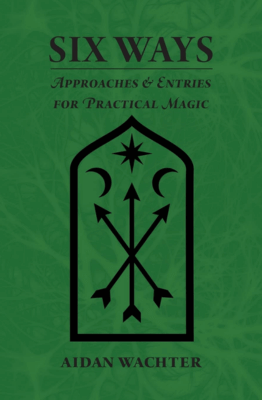 Aidan Wachter’s Six Ways is a concise yet comprehensive guide to practical magic, offering solid information for those ready to deepen their practice. At less than 160 pages, it covers an impressive range of topics, distilling complex concepts into clear and accessible language. Wachter draws on diverse influences—Eastern practices, African Diasporic traditions, animism, Witchcraft, and the occult—and integrates them into a cohesive, practical approach.
This book shines in its emphasis on foundational tools: devotion, discretion, integrity, and consistency. Wachter places animism and relationships with the world at the heart of his practice, making this book especially resonant for those who see magic as inherently relational and reciprocal. Topics include spirits, offerings, meditation, trance, divination, sigils, servitors, shadow work, and the creation of sacred spaces.
While seasoned practitioners might not find new insights here, they may appreciate revisiting core principles. On the other hand, someone entirely new to magic might be puzzled by certain references, such as the Headless Rite, that assume prior knowledge. Six Ways feels most appropriate for someone with some familiarity with basic magical concepts who is seeking a more integrated and holistic perspective.
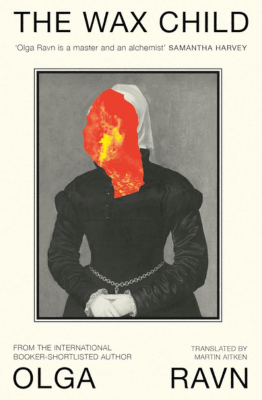 Olga Ravn’s The Wax Child is extraordinary. The novel uses a wax child—a doll used in folk magic—as its narrator, telling the story of the 1621 Aalborg witch trials from a perspective at once intimately connected and fundamentally other. Ravn’s prose is lyrical and fragmentary, refusing linear time in ways that mirror the impossibility of witch persecution itself. What sets this apart from many contemporary retellings is its refusal of easy answers. These women engaged in actual folk magic practices, yet the gap between what they did and what they were accused of reveals the persecution’s true nature. For contemporary practitioners grappling with the complex relationship between historical persecution and modern reclamation, The Wax Child offers no comfortable resolutions but something more valuable: a meditation on community, survival, and bearing witness. Absorbing, unsettling, and haunting. I loved this book.
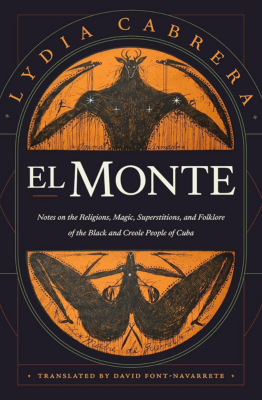 Lydia Cabrera’s El Monte, first published in 1954, is a landmark work of Afro-Cuban ethnography. Drawing on conversations with elderly Afro-Cuban priests who were one or two generations away from the transatlantic slave trade, Cabrera combines ethnography, history, folklore, literature, and botany to provide a panoramic account of the multifaceted influence of Afro-Atlantic cultures in Cuba. The book explores the spiritual and natural landscape of the Cuban monte (forest/wilderness) and the deep connections between plants, orishas, and ritual practice.
What strikes me most about El Monte is how much it captures a specific moment in Cuban religious history—attitudes and practices that have evolved considerably since 1954. This is Cuba before the diaspora, before the profound changes that followed the revolution, before many of the developments that have shaped contemporary Lukumí practice. The book reflects the voices and knowledge of practitioners speaking in mid-twentieth-century Cuba, and that historical specificity is part of what makes it valuable.
I read this in Spanish, but the English translation by David Font-Navarrete was published in 2023, making this foundational work finally accessible to a broader audience. For anyone interested in Afro-Cuban traditions, the history of the diaspora, or the intersection of spirituality and the natural world, El Monte offers an invaluable window into a particular time and place.